
Visit Kite Wars
Six quarters
The village is laid out like a market street
One long avenue, six quarters, all of it within sight of the lanes so you never miss a cut while you eat.
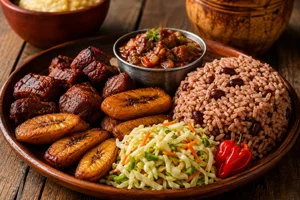
Haitian quarter
Traditional Haitian cuisine
The heart of the village: griot, tasso, legim, diri kole, bannann peze, and pikliz on everything.
Sixteen stalls · Haitian and diaspora kitchens only
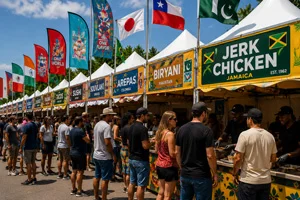
International row
International food vendors
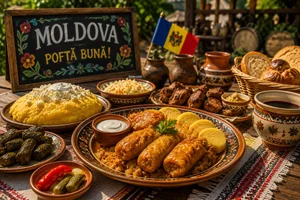
One stall for every country sending competitors — Brazilian, Pakistani, Indian, Chilean, Moldovan, Portuguese.
Fourteen stalls · one cuisine each
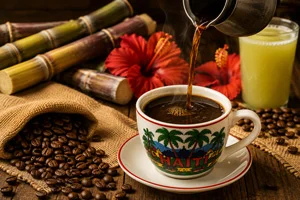
Coffee
Coffee and cane
Haitian arabica roasted dark and poured all day, plus cane juice pressed in front of you and cold hibiscus.
Four stalls · open from first light
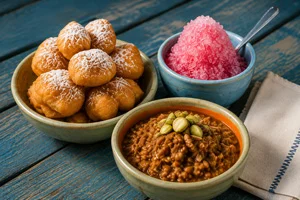
Desserts
Sweet end of the street
Pen patat, dous makos, tablèt pistach, shaved ice with syrup, and whatever the host country does best.
Five stalls · queue after the finals
Host country
Local specialties
A quarter given to the host nation's own cooking, chosen with the local tourism board, not by us.
Five stalls · curated with the host
Shade
Family dining area
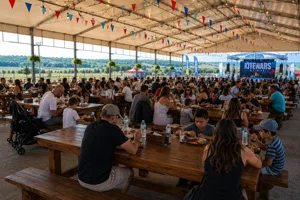
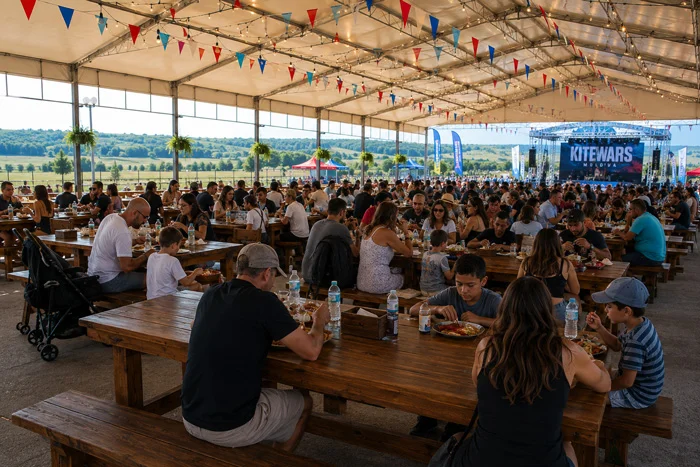
Six hundred covered seats at long shared tables, with water points, high chairs and a kite rack at every end.
Free seating · no reservation needed
The dishes
What to eat, and why it matters
Haitian cooking is the reason this championship has a soul. Every stall in the Haitian quarter is run by a Haitian cook or a diaspora kitchen, and the recipes are theirs, not ours.
Griot ak pikliz
The classic
Twice-cooked pork shoulder, crisp at the edges, with fiery pickled cabbage cutting through it.
Diri ak djon djon
Black rice
Rice cooked with Haitian black mushrooms until it turns dark and smells of the whole island.
Legim
Slow-cooked
Eggplant, cabbage, chayote and beef stewed down to a thick mash, eaten over white rice.
Bannann peze
Fried
Twice-fried green plantain, smashed flat and salted — the thing you eat while waiting for a heat.
Soup joumou
Freedom soup
Pumpkin soup with beef and pasta, eaten in Haiti every 1 January to mark independence.
Akra & marinad
Street snack
Malanga fritters and spiced dough fritters, sold by the paper cone from mid-morning.
Kremas
Adults only
Thick spiced coconut cream liqueur, served in small glasses after the last bell where the law allows.
Family dining area
Long tables, shade, and somewhere to put the kite down
◆Six hundred covered seats at long shared tables
◆Free drinking-water points at both ends of the avenue
◆High chairs, changing facilities and a shaded feeding area
◆Kite racks so nothing gets stood on while you eat
◆A quiet corner away from the drums and the tannoy
◆Every stall carries at least one vegetarian and one nut-free dish